Children's apnea
Unlike snoring, which poses no health risk,sleep apnea is characterized by a decrease in oxygen in the blood during sleep. The lower the oxygen level and the longer the duration of the drop, the more severe the apnea. This is whysleep apnea is such a serious health hazard. In children, sleep apnea is linked to hyperactivity, poor concentration, irritability and may even contribute to developmental disorders.
The most common signs to suspect apnea in children are: breathing stops during the night, frequent awakenings, waking with suffocation, hyperactivity, difficulty concentrating, irritability and mood disorders.
Most children with sleep apnea suffer from so-called obstructive apnea: i.e., caused by mechanical obstruction of the airway. The most frequent sites of this obstruction are the nose and throat, more specifically the adenoids (vegetations) and tonsils.
-
Snoring is the production of noise without a decrease in oxygen in the blood. Although it can cause significant interpersonal embarrassment, snoring is not a health hazard.
Sleep apnea involves a reduction in oxygen in the blood during sleep. This causes severe stress that taxes the entire body and contributes to an increased risk of many diseases.
Snoring and sleep apnea are both linked to sites of airway restriction or obstruction - the nose and throat - which is why it's important to consult an ENT specialist if you're affected.
-
Signs that your child may havesleep apnea - not just snoring! - are: snoring, pauses in breathing, frequent waking, choking during the night, hyperactivity, difficulty concentrating, irritability.
In children, fatigue is rare: hyperactivity is more common!
-
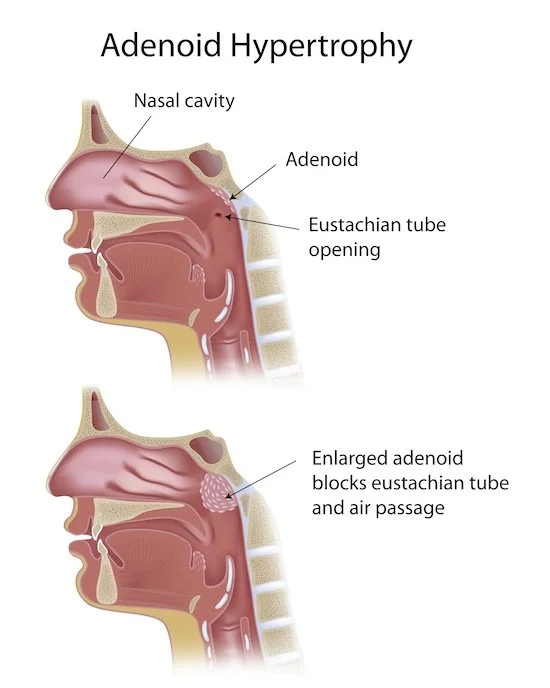
Adenoids are composed of benign lymphatic tissue in the most posterior region of the nose, called the nasopharynx, right next to the opening of theeustachian tube (the famous tube linked to ear infections!).
They are like ganglia inside the respiratory tract, and respond to the presence of viruses and bacteria by increasing in volume.
The problem with children is that their airways are small, and it doesn't take much inflammation to block them... and cause symptoms...
-
Children withadenoid hypertrophy have difficulty breathing through their nose.
They often have chronic runny noses, combined with almost constant mouth breathing. They tend to eat with their mouths open because they can't breathe.
If you ask the child to close his mouth to breathe through his nose, he'll only be able to do so for a few seconds because he's too uncomfortable.
They may present with serous otitis or recurrent acute otitis with hearing impairment with or without speech impairment.
Some children develop a chronic cough due to a runny nose that irritates the throat.
Eventually, many of them experience severe snoring and develop obstructivesleep apnea .
-
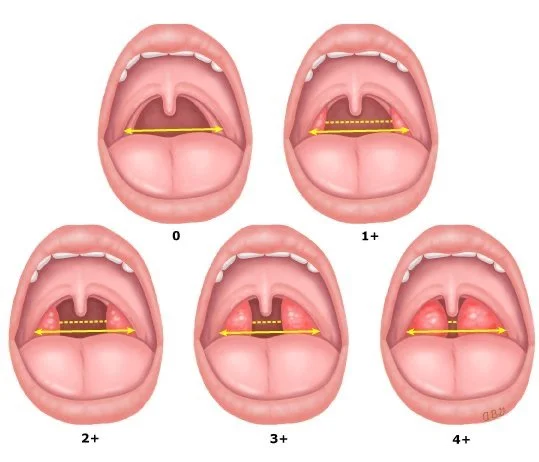
Children withenlarged tonsils almost always have their mouths open to breathe.
They may present with otitis serosa or recurrent acute otitis with hearing impairment with or without speech impairment.
They tend to eat with their mouths open because they can't breathe. Some have difficulty swallowing, eat only small pieces and are prone to gagging caused by enlarged tonsils.
Some children develop a chronic cough because their tonsils irritate their throat.
Eventually, many of them experience severe snoring and develop obstructivesleep apnea .
-
An ENT consultation is the best way to assess adenoid and tonsil hypertrophy.
The history and physical examination are often revealing. Additional tests may include:
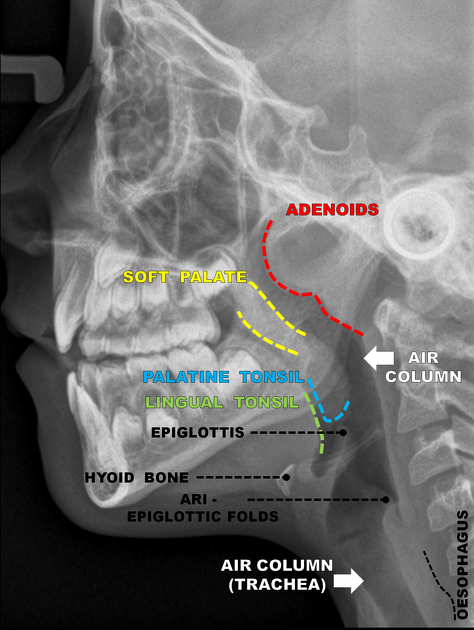
an X-ray of the respiratory tract to measure the impact of the adenoids
nocturnal oximetry to measure oxygen in the blood during sleep
endoscopy (rare; Dr. Brousseau tries to avoid this test in children as much as possible for reasons of comfort)
-
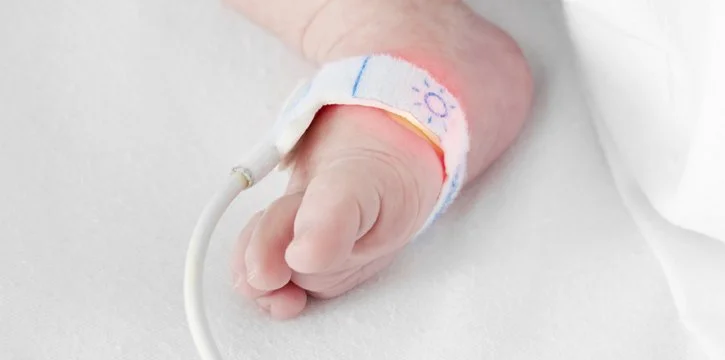
The best way to find out if your child hassleep apnea is to take a nocturnal oximetry test: this measures oxygen levels and heart rate during sleep.
Your child simply wears a catheter held in place by a sticker on a finger or toe overnight. You return the machine the next day for analysis by a healthcare professional.
If you want to carry out an initial screening at home, consider using your smartwatch to measure oxygen saturation while you sleep: normally, saturation levels should not fall below 90%. Note that using these technologies does not rule out the possibility that your child has apnea, but only allows you to carry out an initial screening: if you think your child has apnea, it's best to consult a specialist!
-
Treatment of enlarged adenoids and tonsils depends on the origin, severity and other medical conditions.
In any case, it's important to treat environmental allergies if present - they contribute to inflammation and chronic secretions.
When symptoms are minor and have no effect on health (no sleep apnea), regular nasal hygiene with an anti-inflammatory nasal spray is all that's needed. In some patients, this treatment can help avoid surgery.
When the adenoids and tonsils are too swollen or are causing sleep apnea or other health problems (dental problems, facial growth, etc.), then surgery to remove the adenoids and/or tonsils may be recommended.
-
A scale called McGill is used to determine the severity of sleep apnea in children.
Grade 1 : no apnea detected - medical treatment and follow-up recommended
Grade 2: Mild apnea - medical treatment with daily medication and close medical supervision is recommended.
Grade 3: moderate apnea - surgical treatment is recommended to clear the airways
Grade 4: severe apnea - urgent surgical treatment is recommended to clear the airways
-
No. For safety reasons, adenoid and tonsil surgeries require full in-patient management.
Dr. Brousseau performs acomplete evaluation of your child. Based on the results, if your child requires medical treatment, he or she will be referred to the clinic.
If your child hassleep apnea , or needs surgery for adenoids or tonsils, he or she will be referred directly to a pediatric hospital, where he or she will receive priority care depending on the severity of the apnea , thanks to the investigations already carried out.
-
![Newborn with pulse oximeter on foot]()
Nocturnal oximetry test
-
![Lateral X-ray image of the head and neck showing labeled anatomical features including adenoids, soft palate, palatine tonsil, lingual tonsil, epiglottis, hyoid bone, air column, trachea, and esophagus.]()
X-ray to assess the effect of adenoids and tonsils on the respiratory tract
-
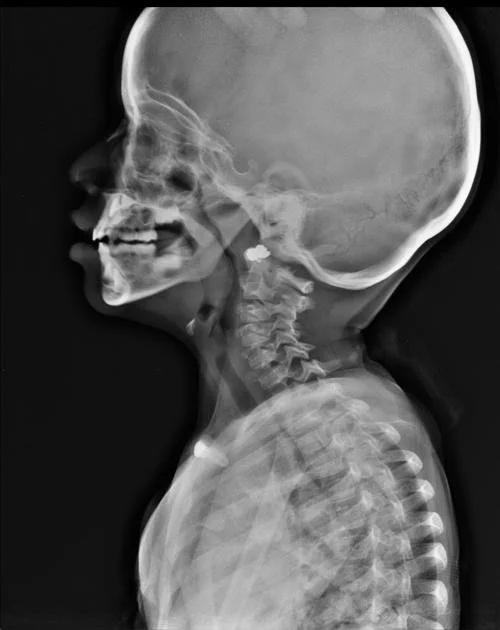
![Side view of a human skull and spine X-ray, showing teeth and vertebrae.]()
Restricted airway: high risk of apnea
-
![Diagram illustrating adenoid hypertrophy; shows two side views of a human head. The top image labels the nasal cavity, adenoid, and Eustachian tube opening. The bottom image shows an enlarged adenoid blocking the Eustachian tube and air passage.]()
Adenoid hypertrophy
-
![Diagram showing tonsil grading scale from 0 to 4+, illustrating varying sizes of tonsils in an open mouth view.]()
Severity of tonsillar hypertrophy